
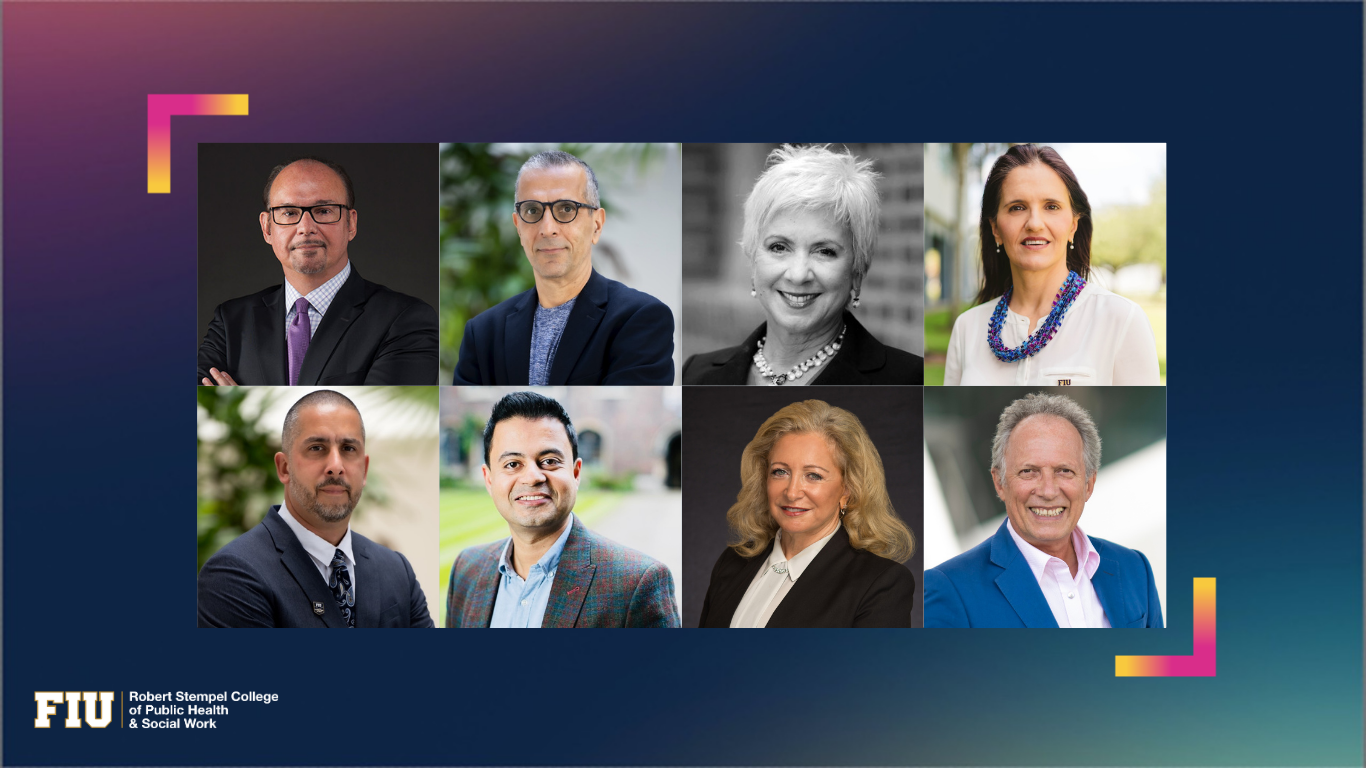
Eight faculty members from Florida International University's Robert Stempel College of Public Health & Social Work have been recognized among the world's top 2% of scientists in the 2026 Stanford/Elsevier ranking, highlighting the global impact of the college's research across public health, nutrition, epidemiology, biostatistics and environmental health sciences.
The annual ranking provides a standardized assessment of scientific impact by identifying the world's most widely cited researchers across 22 scientific fields and 174 subfields. It draws on data from Scopus, Elsevier's comprehensive database of scholarly publications, to evaluate the influence of researchers' work within the scientific community.
Rather than focusing solely on the number of studies published, the ranking considers how frequently researchers' work is cited by other scientists, assessing both career-long contributions and impact during a single year. Inclusion in the ranking reflects the reach and influence of a researcher's scientific contributions within their field.
The Stempel researchers recognized by ranking in 2026 are:
Tomás R. Guilarte, dean of Stempel College and professor of environmental health sciences, is internationally recognized for his research in neurotoxicology and brain science. His work examines how exposure to environmental toxicants, particularly metals such as lead and manganese, affects brain development, neurological function and behavior.
Wasim Maziak, distinguished university professor of epidemiology, is a leading researcher in tobacco control, with a particular focus on emerging tobacco products such as e-cigarettes and hookah. His research examines nicotine dependence, exposure to harmful substances and strategies to communicate tobacco-related health risks, particularly among young people.
Hortensia Amaro, distinguished university professor and senior scholar on community health, is a nationally recognized researcher whose work focuses on health disparities, substance use disorders and HIV prevention. A member of the National Academy of Medicine, her research has advanced understanding of how gender and racial and ethnic inequities affect access to treatment and health outcomes, particularly among women.
Cristina Palacios, professor and chair of dietetics and nutrition, studies the role of nutrition and physical activity in bone health, body composition and obesity prevention. Her research includes clinical trials evaluating dietary interventions and nutritional strategies to improve health among infants, children, adolescents and pregnant women.
Zoran Bursac, professor and chair of biostatistics and associate dean of research administration, specializes in statistical methods for public health and clinical research. His work focuses on longitudinal data analysis, missing-data methods and statistical modeling, supporting research across preventive medicine, epidemiology and population health.
Rajiv Chowdhury, professor and chair of global health, investigates the biological, environmental and social factors contributing to chronic diseases, including cardiovascular disease, diabetes and dementia. His research integrates global epidemiology and implementation science to translate scientific evidence into effective public health policies and interventions.
Marianna Baum, distinguished university professor of dietetics and nutrition, is internationally recognized for her research on HIV, metabolism and nutrition. Her work examines how HIV, substance use and chronic health conditions influence cognitive function, frailty and immune health, including the role of epigenetic changes in aging and disease.
Roberto Lucchini, professor of environmental health sciences, specializes in the neurological effects of environmental and occupational exposures. His research examines how toxic substances affect brain health across the lifespan, including his work investigating the long-term health consequences of toxic exposures and trauma among World Trade Center responders.
Together, their work leaves its mark on health systems worldwide and reflects Stempel College’s influence on the science that shapes public health.